Truth! According to a recent survey asking participants what their most important life goals were, 80% responded that a major life goal for them was to get rich. However, studies have found that close connection is the strongest predictor of happiness, much more so than making a lot of money or winning the lottery!
“Close connection significantly lessens susceptibility to anxiety and depression and makes us more resilient against stress and trauma” (Dr. Sue Johnson, Love Sense).
According to University of Utah professor, Dr. Bert Uchino, PhD, “a good relationship is the most powerful antidote to aging and the single best recipe for good health.” We are actually happier and healthier when we are close and connected.
According to the longest study on happiness, (The Harvard Study of Adult Development) which has tracked 724 participants for over 80 years, the clearest message that the study has revealed is that good relationships keep us happier and healthier.
So while many of our goals are centered around working harder, achieving more, making more money–going after those things as an attempt to have a good life– it is important to remember that it is actually our healthy relationships and our connections that have been scientifically proven to predict the greatest happiness.
Are you looking for ways to improve your relationships and connections? Check out proven tips and strategies here. Practically speaking, stay connected and stay happy!
Truly the greatest battles are fought on the battlegrounds
within our minds. A question that I often asked clients really showcased this.
Imagine the thoughts that you told yourself yesterday were actually heard by
the walls of your house. What color would the walls be? It probably won’t shock
many of you to know that ‘black’ was a common response.
So, how can we change negative thinking?
These are simplified tips, but they really do work. I should
note though that this requires teaching yourself something new and retraining
how you think which is a process so don’t get discouraged if this takes time.
You do not need to be perfect at it, but the more consistent you are, the
easier it gets and the less mental exertion it requires to create the new
neural pathway or way of thinking.
The thoughts that we think about ourselves have the greatest
influence on how we react to the world.
Our brains are filled with neural pathways or basically paths
or hiking trails in our brains. The more we follow a train of thought, the more
we create that path and the grass gets trodden down and the trail becomes more
ingrained. What you focus on with your
thoughts and feelings strengthens the neural pathways in our brains. Our brains
are wired to follow the path of least resistance or the trail that has been
traveled the most.
Recent research led by a team at the University of College London published 10 years ago has shown that the average time to develop new habits is 66 days. This study shows some important things to note: One, the amount of time each participants in that study took to develop a new habit highly varied (from 18 -254 days). We are all wired differently so how long it takes for us to form a new habit will depend on each unique individual. But most important thing to note that this study showed was that, while the time varied, ALL were able to create the new habit.
So, what are the five simplified tips to change negative thinking?
One. You need to make a conscious goal of what you want to change. Mentally state to yourself what you desire to change. Researchers at Harvard, Yale, and MIT have discovered that meditation (or prayer) increases gray matter in the prefrontal cortex which helps shift the body from the stress response to the relaxation response. Meditation (Prayer) is the highest form of mental training that disciplines the mind to focus on what you want and allows the nervous system to create a state of calmness or homeostasis. Mindfulness is powerful in creating change.
Label it and Mentally Say: “Stop!”
Two. When you begin to have a negative thought, you need to
label it in your mind as such and mentally stay “Stop!” Having a label such as “This
is not helpful thinking” or “That is harmful” or “This leads to feelings that
make me feel bad” allows your brain to create an aversion to the formerly easy
way of thinking that it has gotten used to.
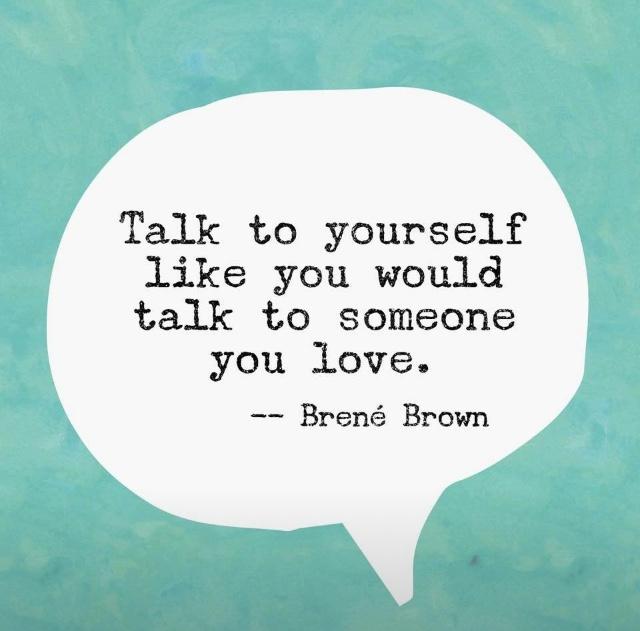
Three. Give your brain a task to think of instead. Think what your best friend would tell you (“I am a fixer of mistakes. I can do hard things. I matter. You are in essense building a new neural pathway in your brain or a new way of thinking.
Four. Focus on the results that you want. “I want to be a
happier person. I want to be a better mother.” Find an action that would give
you those results. (ie smiling, acts of kindness or service.) No act, in the
right direction, no matter how small, is ever wasted.
Five. Repeat, Practice, Repeat. Neural pathways are strengthened into habits through the repetition and practice of thinking, feeling and acting. Keep going. It will get easier.
Practically speaking, “Be kind to everyone-including and starting with yourself.” -Brita
You can transform your world in an instant by the way in which you choose to see it.
Our thoughts are more powerful than we realize. In fact, it is really not the events in our lives that cause us the most difficulty, but our thoughts about those events.
For example:
The Event: My husband is late home from work.
My thought: Great, I have more time to finish picking up the house before he gets here.
How do I feel? Maybe relief, excitement?
What is my behavior? Quickly use that adrenaline to go and pick up the house.
Now, look how much changes with a different thought.
My thought: He’s never been this late before without calling. What if he has been in an accident?
How do I feel? Maybe anxiety, worry and stress?
What is my behavior? Try calling his cell phone.
Our thoughts about an event are going to determine our feelings and the actions we choose are based on those thoughts and feelings. Even more astonishing is that the fact that for all of us, many times our thoughts are actually wrong. Our thoughts can become the cause of unnecessary confusion and pain.
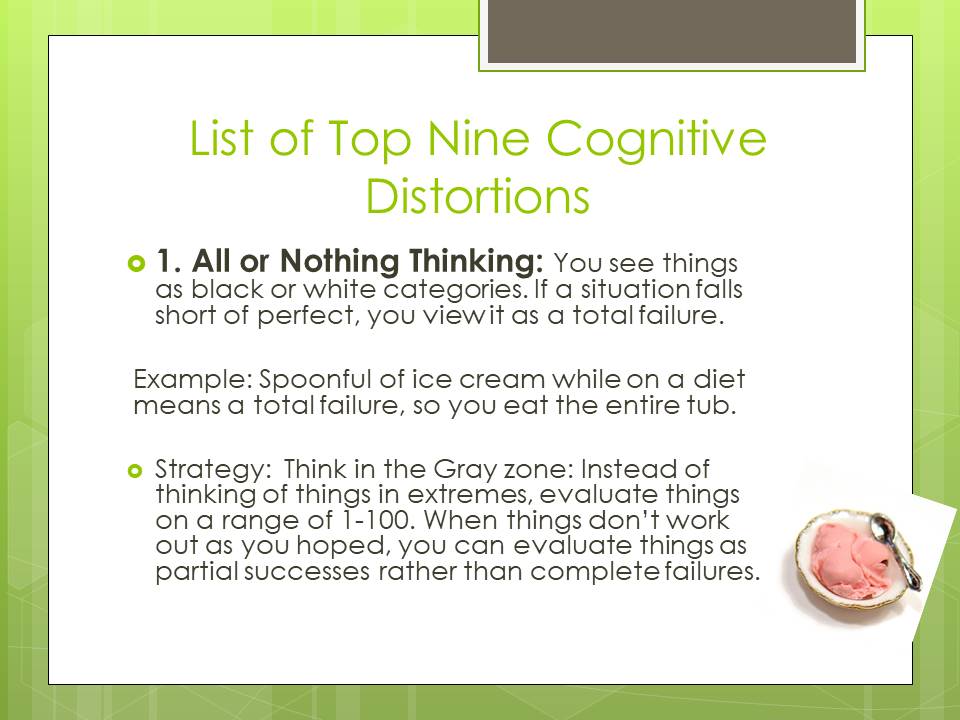
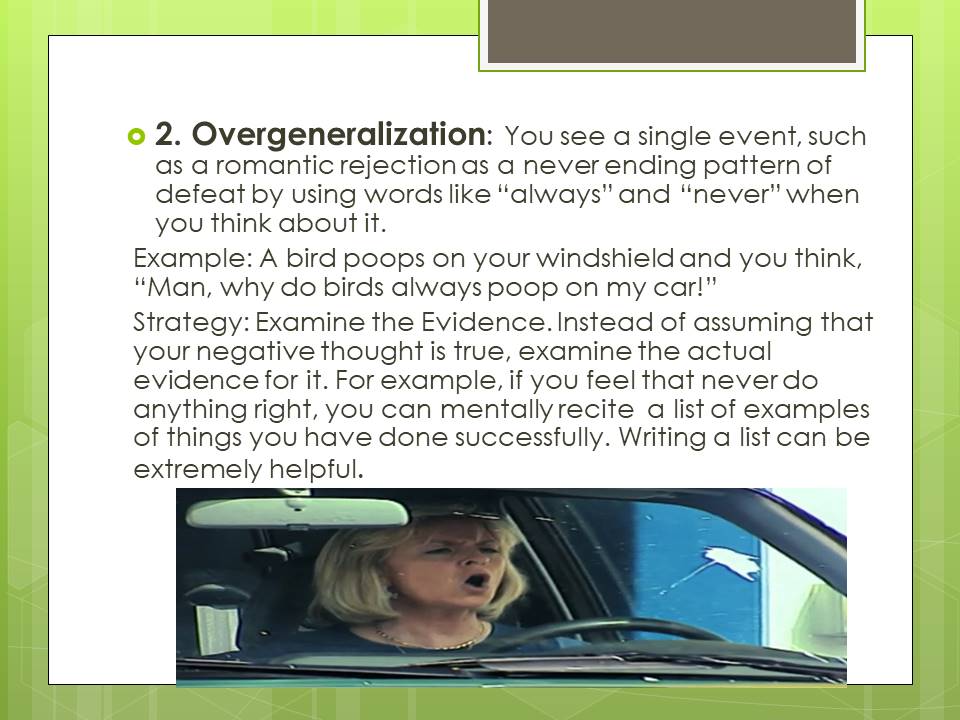
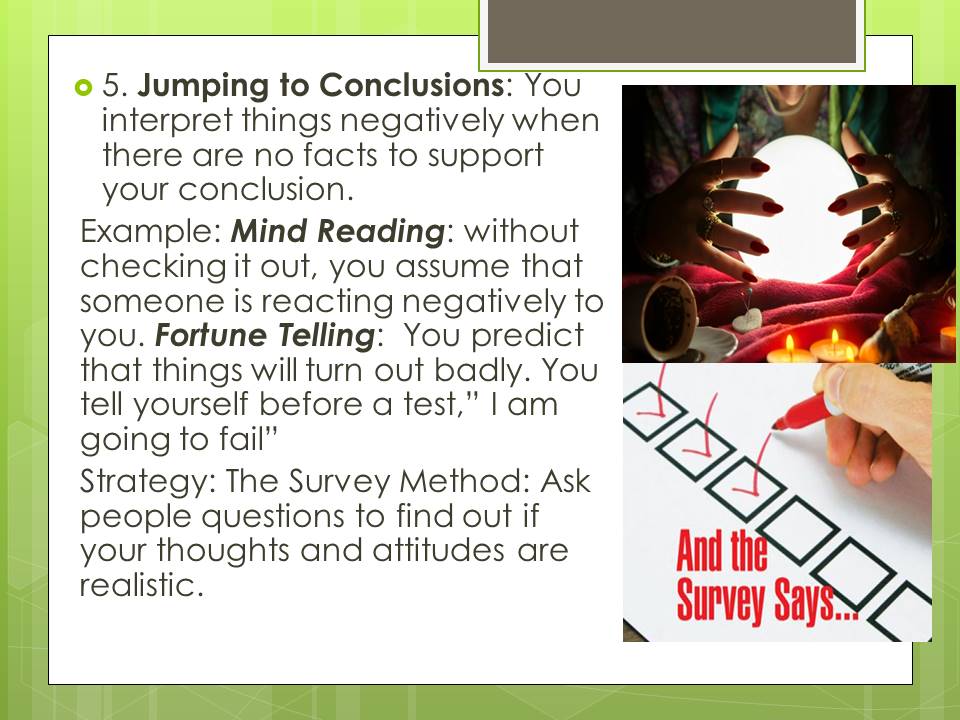
In the therapy world, these inaccurate thoughts are termed ‘Cognitive Distortions’ and everyone experiences them to some degree. Cognitive distortions are simply ways that our minds distort reality and convince us of something that isn’t really true.
While there are a myriad of cognitive distortions, below you will find my list of the top 9 cognitive distortions and more importantly the individual strategies to be able to address them.











 Practically Speaking With Brita