
Tuesday Tip: The Importance of Distinguishing Between Shame and Guilt.

There are few words and feelings that make such a profound difference as the difference between these two five-letter words: Shame and Guilt. While you might think they are synonyms, you will be surprised to know that psychologically speaking, they are more distinct than you might think and understanding their differences can be life altering.

So, what’s the difference? According to renowned researcher/storyteller, Brené Brown, PhD, LCSW, the difference is huge. Brown has been researching shame for over ten years and her TED talks have garnered over 10 million views. She defines shame as the “intensely painful feeling or experience of believing that we are flawed and therefore unworthy of love and belonging – something we’ve experienced, done, or failed to do makes us unworthy of connection.” Shame focuses on yourself: “I am a bad person… I am stupid…I am a failure.”

She defines guilt on the other hand as “holding something we’ve done or failed to do up against our values and feeling psychological discomfort.” She view guilt as adaptive and helpful and focuses instead on the behavior: “This behavior is bad…that was a really stupid thing to do…that outcome was a failure.”
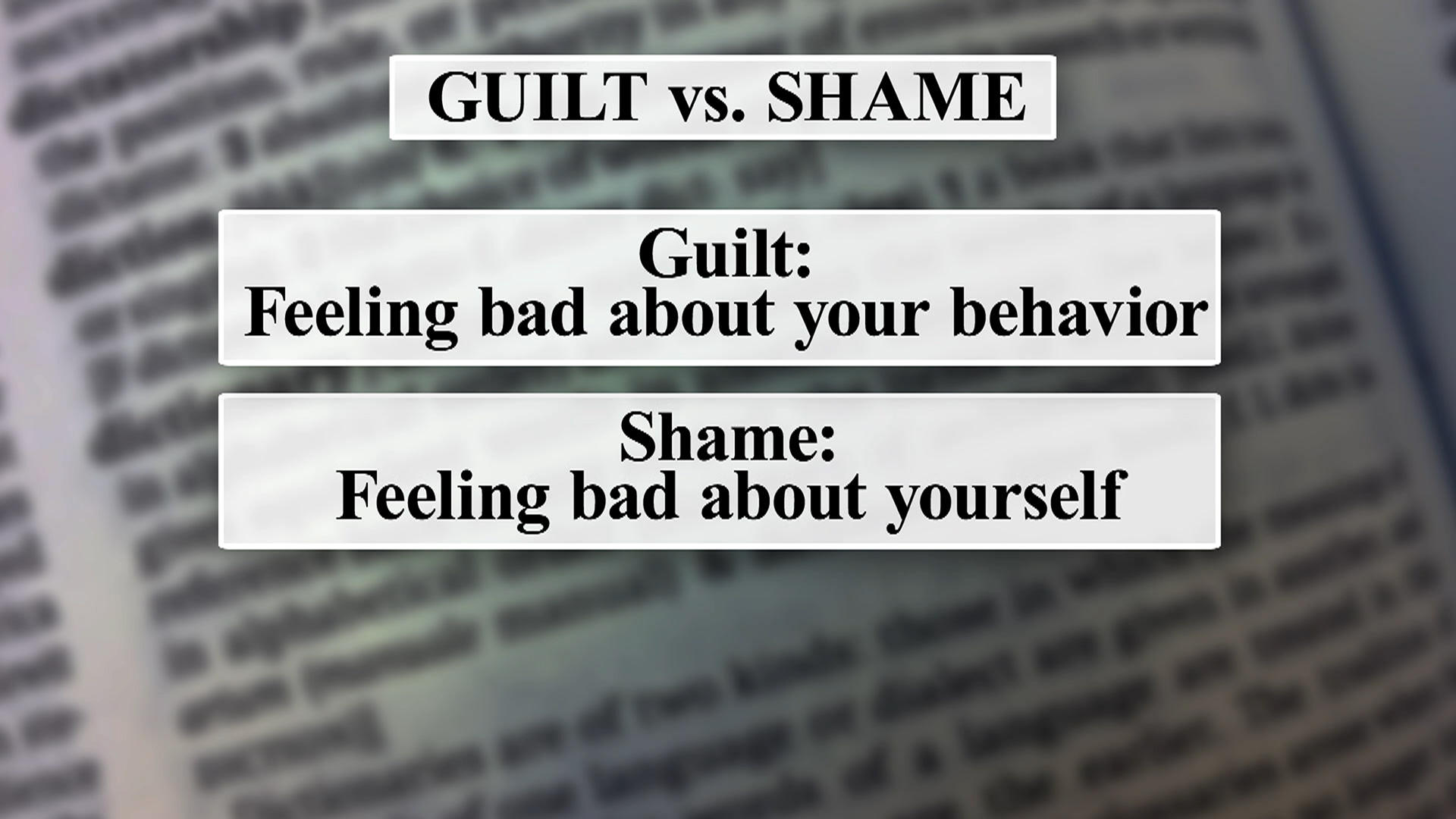
According to Brown, “Shame [is] highly correlated with addiction, depression, eating disorders, violence, bullying and aggression. Guilt? Inversely correlated with those.” What does that mean? That means the ability to change the way in which you talk to yourself (guilt vs. shame) or your internal dialogue can dramatically change the outcome.

Guilt serves as a motivating factor to change whereas shame becomes the catalyst to the downward spiral of self loathing that has been correlated with depression and addiction. For example, I could do really poorly on a test and say to myself: “Dang it. That was a mistake. I should have studied differently.” Now, I still feel bad and the event didn’t change-I still did poorly, but I am motivated to fix that mistake.
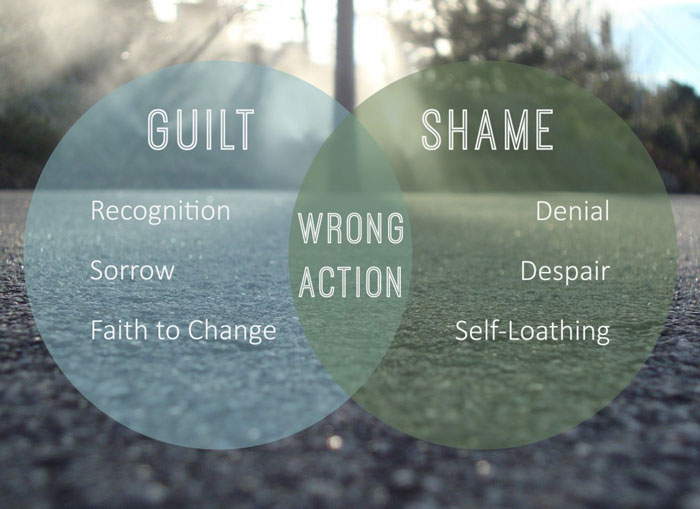
Check out the difference with shame: “Dang it. I am such a loser. I am so stupid. I don’t know why I bothered to think that I would ever be good at taking a test.” Shame cuts at your self identity and does not inspire you to move forward but rather stay in a downward spiral of negative thoughts.
The ability to change the self-talk — and believe it — can dramatically change the outcome.

So, today’s Tuesday Tip: examine your internal dialogue. Is it more inline with shame or guilt? When you or someone you love make a mistake, allow your feelings of guilt to inspire a course correction. As I lovingly repeat to my kids on a daily basis: “Peirce’s make mistakes and Peirce’s fix mistakes.” They might have the same number of letters but feeling shame and guilt are extremely different and distinguishing between them is an absolute game changer.

Truth or Myth?: Asking someone if they are thinking about suicide will increase the likelihood of them committing suicide.

Myth! Research has actually shown that asking about suicidal thoughts or feelings will NOT push someone into engaging in self harm or committing suicide. In fact, the findings suggest that acknowledging and talking about suicide may in fact reduce rather than increase suicidal ideation. Asking about thoughts of suicide is in fact one of the number one things you can do to help and assist anyone who may have suicidal ideation.

So, what do you say if you are concerned about someone who may be experiencing suicidal thoughts? Reach out and be direct. My “go-to” question is:

“Hey. You seem like you have been {quiet, tired, depressed, sad, not yourself etc} and I {love you, care for you, am concerned}. Have you thought about hurting yourself?”

Do not worry that you need to provide all the answers if they do have thoughts about committing suicide. They don’t expect you to have all the answers. They just need you to care enough to ask the question and get them to someone who can help. That is the easiest of the steps because all it requires is a phone.

Keep in mind that you can always call the National Prevention Lifeline at 1-800-273-TALK (or text “TALK” to 741741). {They both go to the same source.} This number is not just for the person who is currently feeling suicidal but also for anyone who is looking for assistance or advice on handling a situation where someone they know might be suicidal. You will be talking with a licensed mental health professional who will do a safety assessment to determine if you are calling for yourself or for someone that you are worried about; if you are in need of emotional support or if you are in crisis. They will talk with you and develop a safety plan and future resources where needed. You can call any day at anytime- 24/7.

So, don’t be afraid to reach out, acknowledge and discuss suicide if you are concerned about someone. There is hope and help and it all starts with asking the question–Just Ask!

Tuesday Tip: Why Honesty is the Number One Thing You Want To Teach Your Children

This answer comes down to six simple words: You cannot change anything without it.

No one is perfect in this life and mistakes are going to happen. What you need to teach your child is not simply how to avoid mistakes but instead how to fix mistakes–what to do if and when you make a mistake.

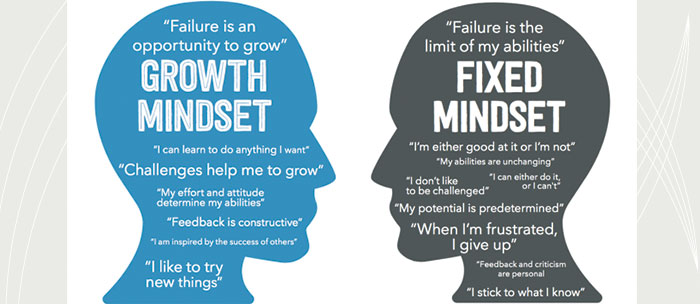
Psychologist Dr. Carol Dweck, a professor and researcher at Stanford University, is known for her research on mindsets-or the ways in which we view the world. She discovered that there were two distinct mindsets–a fixed mindset and a growth mindset.
In a fixed mindset students believe their basic abilities, their intelligence, their talents, are just fixed traits. They have a certain amount and that’s that, and then their goal becomes to look smart all the time and never look dumb. In a growth mindset students understand that their talents and abilities can be developed through effort, good teaching and persistence. They don’t necessarily think everyone’s the same or anyone can be Einstein, but they believe everyone can get smarter if they work at it.

According to Dr. Dweck, “[i]f parents want to give their children a gift, the best thing they can do is to teach their children to love challenges, be intrigued by mistakes, enjoy effort, and keep on learning. That way, their children don’t have to be slaves of praise. They will have a lifelong way to build and repair their own confidence.”

Developing a growth mindset is really key in being able to develop what Dr. Angela Duckworth found to be the single greatest factor of success. She conducted research at West Point Military academy, the National Spelling Bee and even a sales team at a professional company to determine who is successful and why. She found that a term which she called ‘grit’ was the single most defining factor in being successful. She defined grit as passion and perseverance for very long term goals. Grit is having stamina and sticking to your future for an extensive period of time.

Wondering where your grit level is? For those of you who are curious, below are two links for a short grit scale questionnaire developed by Dr. Duckworth – [The first one is an 8 question for children to access where they are on a grit scale and the second is a 12 question for adults.]

https://www.dropbox.com/s/rn5wo3y0iis0qtf/8-item%20Grit%20Scale_Child%20Adapted%20Version_4.pdf?dl=0

https://www.dropbox.com/s/2pzjz1v0dadmr8r/12-item%20Grit%20Scale.pdf?dl=0


Having a growth mindset of knowing that your talents and abilities will get stronger through your effort and persistence is the motivating factor for developing grit, and thereby being successful. However, the key to both developing a growth mindset and developing grit is really honesty. Being honest with your thoughts and feelings is the first step to being able to recognize where you are and then being able to improve. Cultivate and teach your children the importance of honesty. It is the foundation of trust, success and change.

So, today’s Tuesday Tip: When a child (or anyone really) comes to you about a mistake that they have made, instead of giving into the myriad of emotions that it evokes, take a breath and say the words: Thank you for being honest. This reinforces that you value trust and honesty and reminds both of you that this is the first step in being able to fix any and all mistakes. Honesty- you cannot change anything without it.

Truth or Myth: We are Born to Need Each Other

Truth! One of my husband’s favorite songs is “Islands in the Stream” by Kenny Rogers and Dolly Parton. In case you were curious or just wanted to listen to that song again, I included a clip below. {You’re welcome. ;)} Unfortunately, while my husband might love this song, the message of this song can perpetuate this false notion that we are meant to be ‘islands’ in a relationship and that being self-sufficient is what makes your relationships stronger. However, researchers will tell you that, in fact, close connections make us stronger and that we are born to need each other.

Dr. Susan Johnson, developer of Emotionally Focused Therapy (EFT) and 2016 Psychologist of the year noted that, “The human brain is wired for close connection with a few irreplaceable others. Accepting your need for this special kind of emotional connection is not a sign of weakness, but maturity and strength.” She emphasizes that self-sufficiency is just another word for loneliness and that we all long for a safe haven in our relationships.Strength, she argues, comes from close connections and we are born to need each other.


The need we have as children to be able to call to a special loved one and know that this person will respond with reassurance and comfort never goes away.

Connections in life are critical and are the source of both pain and joy. Dr. Naomi Eisenberger, a psychologist at the University of California Los Angeles (UCLA) found during her brain imaging studies that rejection and exclusion trigger the same circuits in the same part of the brain (the anterior cingulate) as physical pain. In fact, this part of the brain turns on anytime we are emotionally separated from those around us. On the other hand, close connections with others turn on reward centers in the brain and flood us with calm and happiness chemicals like dopamine and turn off stress hormones like cortisol. We have an innate need to connect. It is a basic primary need– like oxygen and water. We truly are born to need each other– so do not be afraid or feel ashamed of this need for connection. No man is an island–not even Kenny Rogers.

Making Things ‘Slightly Smaller’: A Functional Tip When You are Feeling Overwhelmed

Who hasn’t felt the feeling of being overwhelmed? You know that feeling when things were already pretty stressful and then one more thing happens and threatens to capsize the whole boat. When you are in the midst of the storm it can be difficult to be able to come up with a plan that will deal with the storm and rightly so. When your brain is flooded, it no longer processes things the same way as many functions are ‘offline’ not allowing you to process thoughts as you usually would. So, when you are feeling overwhelmed there is a tip that will help jumpstart your mind into staying engaged and being able to assist in coming up with a plan to address your state of mind. It’s called “Slightly Smaller”.

After taking a deep breath, you can tell your brain to assign your current state into a number. For instance, if I am really stressed out I might assign myself an 8. Instead of trying to solve and figure out the whole amount of stressful 8, I would make it slightly smaller by subtracting it by 1. Then, I would ask my mind, “What would make it a 7?” This allows your mind to be able to stay engaged and come up with a plan to address your stress in a smaller, more manageable portion. You don’t need to try and solve everything at the moment. Storms will come and go as they do, but the ‘Slightly Smaller’ tip will allow you to be able to use your mind to be able to stay in and process, problem solve and survive the state of feeling overwhelmed. Don’t let the simpleness of the tip fool you–try this the next time you recognize feeling overwhelmed and see for yourself if your mind doesn’t play a more active role in being able to get your ship to the shore. Happy Sailing!

Looking for more ways to deal with feeling overwhelmed? Check out:

Top 9 Proven Strategies to Manage Stress {Including the Science Behind How They Work!}

9 Proven Strategies to Change Your Thoughts and Change Your World

Truth or Myth? You Can Tell Your Mind What NOT to Think

Myth! This is one that you can easily test out on yourself. Social Psychologist Daniel Wegner and his colleagues began this experiment back in 1987 when they asked participants to simply not think about the white bear while they verbalized their stream of consciousness (said what they were thinking out loud) for five minutes. If a white bear came to mind, he told them to ring a bell. This experiment quickly became known as the white bear phenomenon as they discovered that by trying not to think of something, we actually continually think it.

While you can not tell your mind what not to think, the opposite holds true. You can tell your mind what to think. So, the next time a negative thought comes into your mind, instead of telling your mind NOT to think it, tell your mind what TO think about. You will see that while you may not hold the power to tell your mind what not to think, you can redirect your thoughts. You cannot control every thought that comes into your mind just like you can’t control if a bird lands on your head. However, you can prevent him from making a nest.

Interested in finding out more ways that you can handle negative thoughts? Check out

5 Simple Steps to Change Negative Thinking

Tuesday Tip: The Power of a Positive Memory

There is a lot of energy focused on negative memories, and for good reasons. For one, everyone experiences them. From a evolutionary stand point, we are wired to remember the things that bring us pain. This is our ancient, highly effective warning system that is designed to keep us safe. By remembering the things that have caused us trouble, we’re more likely to avoid them and keep ourselves alive. 

In fact, researchers have discovered people have a tendency to attach a much higher weight, {or valence in psychological lingo}, to negative things rather than to good. One of my favorite research studies was done way back in 1984 by two professors (Dr. Daniel Kahneman and Dr. Amos Tversky) and involved the participants hypothetically winning or losing money. Basically, what they found out was that you are more upset about losing $50, than you are happy about gaining $50. Something viewed as negative made a greater impact.

While negative events may hold more weight and make a greater impact,
there are two things something that researchers have discovered about the human brain that is absolutely incredible. First, researchers also have found that many good events can actually overcome the psychological effects of a bad one. According to Dr. Roy Baumeister, the psychological effects stemming from a bad event can be negated with a ratio of 5 positive events to one negative event.

Second, the research found that by savouring a positive memory, there was a kind of ‘re-experiencing’ of the event contained in the memory. Senses were re-engaged and the emotions associated with the memory were re-experienced. You can trigger your brain to think about an event and your brain will recreate the exact feelings surrounding that event.


In a new study just recently published in January of this year, researchers out of the University of Cambridge found that recalling specific positive memories and happy life experiences fortified resilience and reduced the risk of depression.

While our hard wiring makes it impossible to avoid the the greater impact of negative events, researchers have now discovered that positive memories can make a definite effect on us. Positive memories can increase positive emotions and have the capacity to reduce anxiety by reducing the way we respond to threat. It also can ease the symptoms of depression and stress as evidenced in cortisol levels. It allows us to see the world through a more optimistic and happier filter.

An example of a picture off of my fridge of a fun memory that always makes me smile.

So, today’s Tuesday Tip: Surround yourself with positive memories. Whether it is pictures of a specific family event that make you laugh or a playlist that reminds you of the good old times or the scent of a freshly washed blanket that reminds you of home–create an environment that allows you to remember and reexperience the positive memories in your life. Positive moments can make more of a difference than you know.


Truth or Myth? Conflict in Marriage is Unhealthy.

Myth! According to leading relationship expert, John Gottman, PhD: Happily married couples may have a lot of conflict. It is the positive sentiments overriding the negative ones. They are quicker at repairs. It’s not the appearance of conflict, but rather how it’s managed that predicts the success or failure of a relationship.

Looking for tips to improve dealing with and resolving conflict? Check out these articles:

7 Proven Tips To Handle Conflict

Truth or Myth? Many Marital Arguments Cannot Be Resolved.

Top 9 Proven Strategies to Manage Stress {Including the Science Behind How They Work!}

Managing stress is a life skill that we all need to learn. These are 9 top strategies that are scientifically proven to help alleviate and manage stress.

#1: Meditation (Prayer): Research suggests that daily meditation or prayer may alter the brain’s neural pathways, making you more resilient to stress. A study conducted by Harvard Researchers at Massachusetts General Hospital revealed that meditation rebuilds the grey matter in our brains in just 8 weeks. It is important to remember that mediation does not mean to ’empty your mind’ but rather is the process of letting your thoughts and feelings flow without judgment. You do not need to be in any particular position (standing, sitting or kneeling etc), but it is a state of peace and self-awareness.

#2: LOL! A good belly laugh doesn’t just lighten the load mentally, it lowers cortisol, your body’s stress hormone and boosts brain chemicals called endorphins, which help your mood.

#3: Deep Breathing: Deep Breathing counters the effects of stress by slowing the heart rate and lowering blood pressure. It also allows more oxygen to go to the brain which slows down the amygdala and allows the prefrontal cortex to return to functioning.
Basically you can break your brain into two parts with two distinct functions- a part that feels and a part that is logical and makes plans. When the one side of your brain gets overwhelmed or flooded, the logical side that calms and creates a plan on how to address being overwhelmed stops working. By simple just breathing you allow necessary oxygen to the logical side of your brain allowing yourself to come up with a plan. Try it out- before you make a big decision or begin to get mad at your children or upset at a coworker, take a deep breath and notice how much better you are able to think and thus make more logical, thoughtful choices rather than reacting to the emotions. There is true power in the deep breath, so just breathe!!

#4 Music: Listening to soothing music has been proven to lower blood pressure, heart rate and anxiety. Test this one out for yourself: Listen to 30 seconds of each song and see if you notice a difference in your heart rate and mood.

#5: Get Active: All forms of exercise can ease stress by helping the brain to release feel-good chemicals including endorphins, domamine and seratonin.
A study published in Neuropsychopharmacology revealed that regular exercise increases the level of tryptophan in the brain (an amino acid used to manufacture serotonin). While the research differs on how long to exercise in order for the body to release the chemicals, studies suggest it varies between 10 -30 minutes.

#6: Be Grateful: Gratitude has been shown to activate the hypothalamus in the brain which is responsible for regulating all kinds of bodily functions- including hunger, sleep, body temperature, metabolism, and how the body grows. Studies done by researchers at Indiana University and at Harvard have discovered that these neurological benefits experienced by their study participants were shown to be longer lasting. Something as simple as writing down three things you’re grateful for every day for 21 days in a row significantly increases your level of optimism, and it holds for the next six months.  Journaling about gratitude can be a fantastic way of being able to focus on things in your life which bring joy and that you should be grateful for. Cultivating gratitude is a game changer.

#7: Sense of Smell: This one is bound to raise some eyebrows, but your nose can become a powerful ally and can transport your thoughts quicker than almost anything. It highlights a different area of your brain and can highlight positive memories and the feelings associated with those memories instantaneously. Lotions, chapsticks, gum, cookies, flowers-really anything with a fragrance can change your mood in a split second. If you haven’t tried it, this is one that might just surprise you.

#8: Get Outdoors: A change of scene also forces your brain to be able to reboot as it has to process new visuals, hearing, even sense of touch from the difference in the weather. Being outside in the sun allows your body to absorb vitamins that also affect your brains ability to function.

#9: Holding Your Loved Ones (Even Animals!): “Cuddle” Hormones (oxytocin) can actually turn off stress hormones. So go cuddle with a loved one and watch a movie or spend time with a loved pet. Connection is a powerful way to alleviate stress.

Learning to manage stress is an important tool that everyone needs to learn in order to be successful. These 9 strategies are scientifically proven to help you manage the stress you experience as a part of life- test them out and see what impact they make in your stress level. Remember, practically speaking:


Tuesday Tip: Just Do It! Actions Can Change Your Feelings

Many times we get trapped in a vicious cycle- we wait until we feel like doing something. I can’t tell you how many times I’ve heard, “But I don’t feel like practicing the piano right now!” or “I didn’t feel like exercising today so I didn’t.” The truth is that we can dictate our feelings. You do not need to wait or spend the energy to pysch yourself into feeling a certain way. Your actions can change your feelings.

Take exercise for example. I am not one that looks forward to working out even though I have had an established routine for quite some time. I am not going to ever feel like exercising. However, there is a truth about how are minds work that helps me to to start exercising. I know that my feelings can change with actions. I know that chemicals including seratonin (which changes your mood) and endorphins (also commonly known as the body’s natural pain killers) are released during exercise so 5-10 minutes into my workout, I will feel differently. I can remember that previous times that I have not wanted to exercise but still completed the workout, I felt better after I have worked out. The action of working out will help me overcome my not feeling like doing it. When you can correlate your actions as a way to be on the way to getting the results that you want, your motivation will automatically increase.

Today’s Tuesday Tip: Just Do it. Do an action even when your feelings don’t match. Just take a step in the direction that you want to go regardless of your feelings. Make that call you have been avoiding. Set up the appointment you have been dreading. Start practicing that piano. Just start to exercise. You will find that you can change and control your feelings rather than have them dictate you. When you realize that your feelings do not define you and that your actions can change those feelings, you will be able to achieve anything you want–Those small successes will take you to the big results that you are looking for.